Neutron-detecting lithium-6 glass matched to photomultiplier tube sensitivity for use in extreme environments
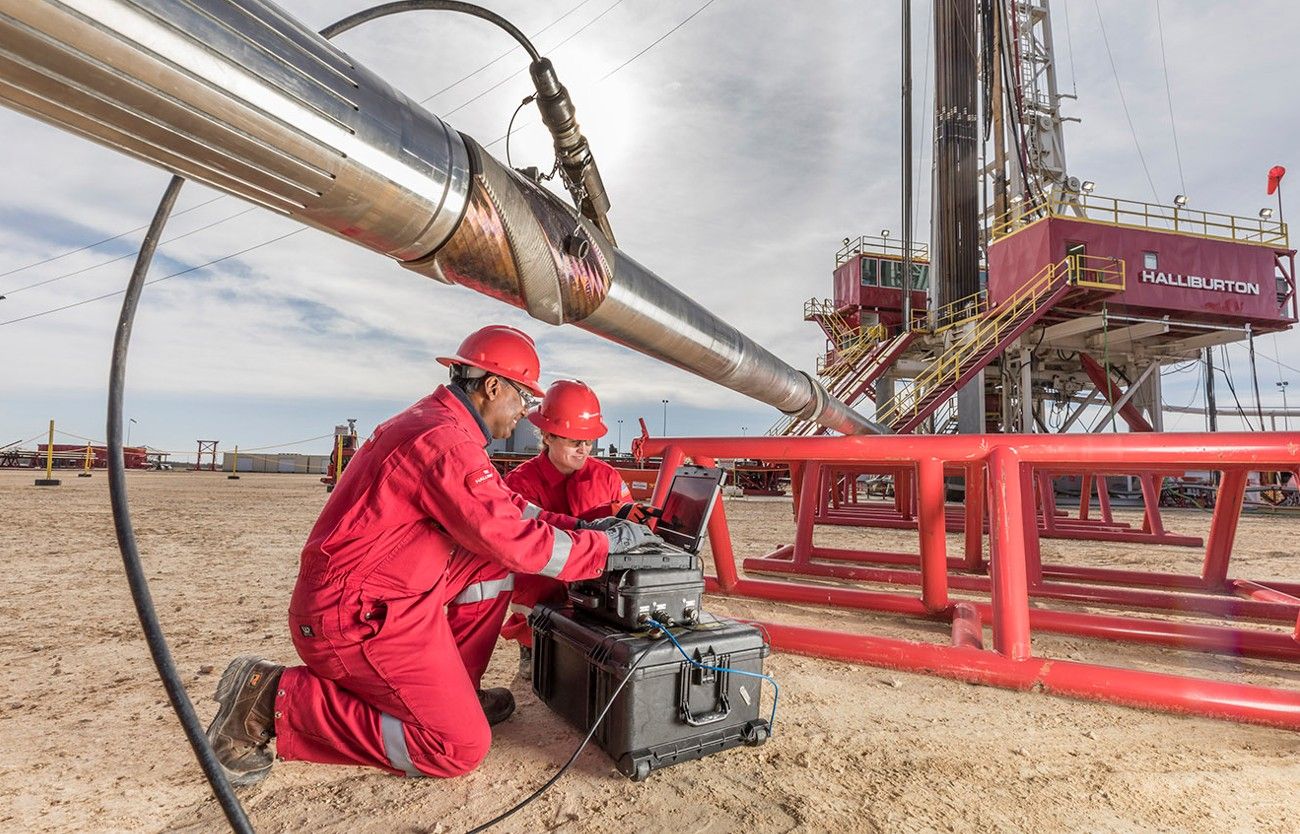
GS20® glass has been adopted as the technology of choice by top tier oilfield service companies for downhole neutron-porosity logging tools, due to its ability to withstand high temperature and high shock environments.
This characteristic is essential when porosity measurements are performed during drilling operations—such as Logging While Drilling (LWD) and Measurement While Drilling (MWD) —where tools are subjected to high levels of vibration and heat generated by drilling activity.
Why Glass?
Glass is often assumed to be brittle, but in reality it is an exceptionally robust material. When engineered correctly, scintillator glass can withstand extreme temperatures, high shock, vibration, and harsh chemical environments—making it ideally suited to demanding applications such as oil and gas well logging.
How it works?
Neutron-porosity logging tools contain a neutron emitting source, typically an americium Beryllium (Am-Be) or Plutonium Beryllium (Pu-Be) source, or an electronic neutron generator producing fast neutrons, which travel across the formation surrounding the well. The fast neutrons, with energy ranges from 4 MeV to 14 MeV, are slowed down and thermalised by collisions with hydrogen nuclei present in the pores of the rock. Some of these thermal neutrons are then scattered back towards the tool. Here, the back-scattered neutrons are counted by two scintillator detectors placed at different distances from the source (near and far) to compensate for the borehole effects. This configuration is often referred to as a compensated logging tool.
The 6Li isotope in the GS20® offers a 940 barn cross section for thermal neutron capture via the following reaction:
n + 6Li → α + 3H + 4.78 MeV
The secondary particles of this reaction lose their energy within the surrounding scintillator material near the interaction point and this gives rise to the emission of light. This generates approximately 6,000 photons for each neutron absorbed by the GS20® glass. The photons emitted by the GS20® glass are subsequently converted into electrical signal by a photomultiplier tube, to give a characteristic thermal neutron peak at Gamma Equivalent Energy (GEE) a little above 1.6 MeV at room temperature. The GS20® glass of one of the detectors is often shaped as a thin-walled cylinder to lower the gamma sensitivity. This design enables to obtain an acceptable neutron gamma discrimination up to temperatures of approximately 150°C-175°C, despite the shift of the neutron GEE peak towards lower energies.
Why use GS20 instead of He-3?
For decades, helium‑3 (³He) gas proportional counters have been used for neutron detection in oil and gas well logging. However, the industry has increasingly moved away from ³He due to supply constraints, cost volatility, and long‑term availability risks. Helium‑3 is a scarce isotope, produced almost exclusively as a by‑product of nuclear weapons programs, making its supply structurally limited and subject to allocation controls.
GS20® lithium‑6 (⁶Li) glass scintillators provide a robust, solid‑state alternative, specifically suited to modern downhole neutron‑logging tools. GS20® is a manufactured scintillator material and is not dependent on strategic nuclear by‑products. This ensures stable availability and long‑term supply security for logging tool fleets, unlike helium‑3.
Solid‑state robustness
As an inorganic glass scintillator, GS20® offers excellent resistance to:
vibration and shock,
mechanical stress
harsh downhole environments
This makes it well suited to LWD, MWD, and wireline tools, where gas‑filled detectors can be mechanically vulnerable.
Scintacor and its predecessors have been involved with glass scintillators including lithium-6 (6Li) enriched products since 1958. Back then, as Levy West Laboratories, we started manufacturing these glasses with various compositions based on the work by Anderson et al.
Today Scintacor is the owner of the GS20® trademark and a trusted partner of many leading research organizations and commercial customers that have chosen GS20® and the companion formulations for their unique properties, mechanical robustness, temperature range of use -200 to 250 C and resistance to all organic and inorganic solvents except hydrofluoric acid.
Contact Us
Looking for reliable neutron detection solutions for challenging conditions like oil well logging? Reach out to discuss Lithium-6 glass scintillators:
GS20® glass offers high sensitivity due to its high lithium-6 content (6.6% by weight), which provides a high cross-section for thermal neutron capture, essential for accurate porosity measurements.
Our scintillators are mechanically robust and solid-state, making them far more resistant to the shock and vibration of active drilling compared to liquid-based or fragile crystal scintillators.
The emission wavelength of our scintillators is optimized to match the sensitivity of standard Photomultiplier Tubes (PMTs), ensuring maximum light collection and signal clarity.
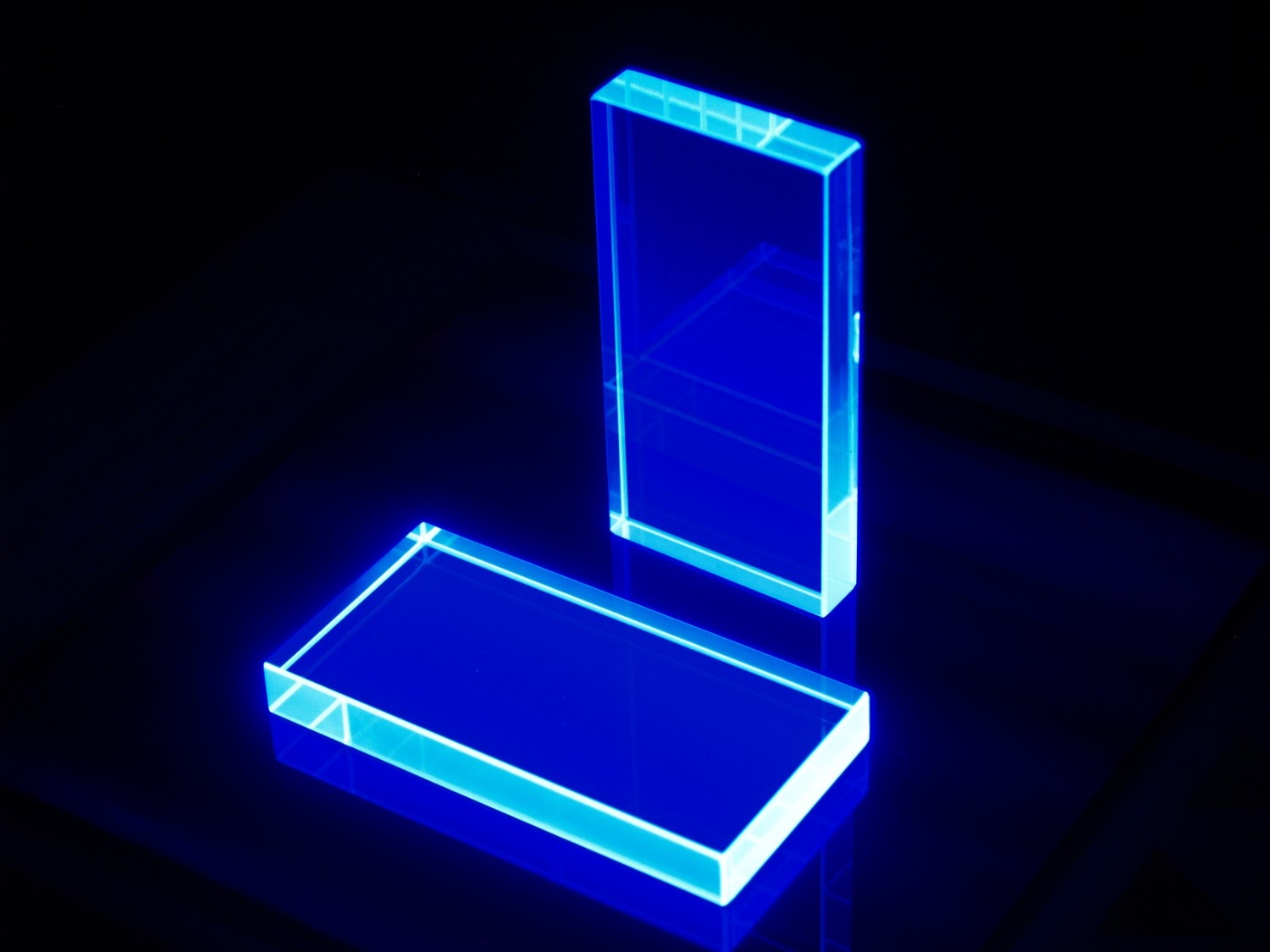
We offer a range of standard and custom sizes. Glass can be supplied as polished discs, rectangles, or thin-walled cylinders specifically shaped for neutron detectors in wireline and MWD tools.
Yes, lithium glass is exceptionally robust and chemically inert. It is engineered to withstand the high-pressure environments and harsh chemical exposure typical of deep-well logging.
Absolutely. Our flexible screens for NDT are specifically designed to wrap around pipelines, welds, and other cylindrical structures to provide high-resolution X-ray imaging in the field.
Yes, we specialize in custom build parameters. We can tailor the doping and physical dimensions of the glass to meet specific thermal or epithermal neutron detection requirements.
CsI Intra-Oral
CsI Panoramic
CsI Cephalometric
CsI Cone Beam CT
CsI Intra-Oral
High performance, robust scintillator for ultra-high resolution intra-oral imaging
Edge-to-edge image area
Excellent uniformity
Ultra-high resolution imaging
CsI Panoramic
High light output, fast response scintillator for high resolution upper and lower jaw imaging
Low patient dose
Dynamic image capture
High resolution imaging
CsI Cephalometric
High light output, fast response scintillator for high resolution cranio-maxillofacial imaging
Full skull applications
Dynamic image capture
High resolution imaging
CsI Cone Beam CT
High light output, fast response scintillator for orthondontic and surgical procedures
Orthodontic applications
Fast response for sharper imaging
Real time 3D imaging
Contact Us
125 Cowley Road
Cambridge Commercial Park
Cambridge, CB4 0DL
United Kingdom


 Part of Tibidabo Scientific Industries